

The NHL's All-Time Goal King Barely Skates. Here's the Trick Beer Leaguers Can Steal

The NHL's All-Time Goal King Barely Skates. Here's the Trick Beer Leaguers Can Steal
Alex Ovechkin has one of the slowest top speeds in the NHL and more goals than anyone who has ever played. He doesn't win the race to the puck. He wins the race to the spot. That's great news if your legs are gone by the second period.
Breakdown based on Saucer Pass's video on how Ovechkin scores without skating, plus our drills and positioning guide for rec players. ~11 min read.
SHOW ME THE SPOTThe short version
One scoring spot you go back to every shift. Ovi's is the top of the left faceoff circle.
Let linemates lead the rush. Trail in and get to open ice as the defence collapses on them.
Know your shot before the pass arrives. Reps from the same spot turn the decision into a reflex.
Don't wait for a perfect pass. Bouncing pucks are harder for goalies to read too.
"Lazy" was the wrong word
For years, Ovechkin got hammered for how little he skated. Pundits built TV segments around it. A former coach publicly said he quit on a play. The criticism had one thing right: he really doesn't chase the play through the neutral zone like most stars do.
What the critics got wrong, as the Saucer Pass video lays out, was assuming that not skating meant not working. Ovechkin has described it himself: while his linemates fly through the zone, he stays in his spot and reads the game. Years ago his coaches even redesigned his role around it, with linemates leading the rush while he held back and arrived late.
The result is a spot so famous it has a nickname, "Ovi's office," near the top of the left faceoff circle. According to the video, he's scored well over 200 goals from that one patch of ice since 2007-08. He doesn't need to be fast to get there. He never left.
The value isn't in the sprint. It's in already being where the puck is going.


Why this matters more for you than for him
Ovechkin chose this style. For most beer leaguers, it's chosen for us. You play one late game a week, you've got two good sprints in you per shift, and by the third period the legs are writing cheques they can't cash.
The video makes a point that hits home here: players who build their game on foot speed lose it when the legs slow down, because the skill and the athleticism were never separated. Ovechkin is still scoring in his 40s with less ice time, because his game was never built on speed.
You can't out-skate a 24-year-old at 10:45pm. You can out-position him.
The "skate less, score more" method in 5 steps
The ideas come from how the video explains Ovechkin's game. The step order and how to use it in a rec game are ours.
Choose one spot in the offensive zone you'll shoot from all season. Use the table below to find yours. One spot, not three.
On the rush, let your fastest linemate drive wide and draw the defence. You trail a few strides back and glide into the gap they leave.
Feet planted, knees bent, stick on the ice, blade open to the passer. Ready to shoot before the puck is on its way, not after.
Pick your target while the puck is still on your teammate's stick. Far side low is a good default. No second thoughts once it arrives.
Rec passes bounce, roll and arrive behind you. Shoot them anyway. A quick, imperfect shot beats a perfect one that never happens.
Find your office: a quick guide for rec players
Ovechkin shoots right and sets up on the left side, his off-wing, so a pass from the other side lands straight on his forehand. Our guide applies the same logic to your game.
Tell your linemates where your office is before the game. A spot only works if the passer knows you'll be there.
Arrive late, on purpose
This is the part that feels wrong the first few times. Your instinct is to sprint with the puck carrier. Instead, hang back a few strides and let the play develop in front of you.
Our honest caveat: "arrive late" on offence isn't "skip the backcheck." Ovechkin took years of heat for his defensive game. In a rec league, do your job in your own zone, then go back to your office. Your linemates will feed you more if you're not the guy cherry-picking at the red line.

Everyone knows where he'll be. So why can't they stop him?
The best part of the video. Washington's plan has never been a secret: get the puck to Ovi near the top of the circle and let him shoot. Here's why it still works, and what transfers to your game.

The video cites an estimate that an 80 mph shot from about 20 feet gives a goalie roughly 0.17 seconds, while a simple human reaction takes about 0.2. Knowing where the shot is coming from doesn't buy back that time.
For you: you don't have his shot, but a quick release from close range shrinks the goalie's window too. Speed of release matters more than wind-up.
Good goalies read stick angle, hip rotation and approach speed before the release. The video mentions eye-tracking research suggesting elite goalies watch where the stick meets the puck.
For you: use the same setup for every shot from your office, so the first look gives nothing away.
Scouts have long said Ovechkin is just as dangerous off a wobbling, tumbling puck as a flat one. Small variations like that make the goalie's read less reliable.
For you: stop waiting for the perfect pass. Your stick has to stay steady in your hands when the puck arrives on edge.
Psychologists call it chunking: after enough repetitions of the same situation, your brain recognises the whole pattern at once. After two decades in the same six feet of ice, Ovi's shot decision is made before the puck reaches him.
For you: repetition from one spot. That's what the drills below are for.

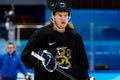
Ovechkin in 2026: knees bent, stick on the ice, already set. Photo: Quintin Soloviev, CC BY 4.0, via Wikimedia Commons
Standing still is a skill: build a base you can shoot from
If you're not generating power from a full-speed stride, it has to come from somewhere else: a solid base and a stick that's loaded and steady in your hands. Our checklist for the moment you set up in your office:
Our drills: build your own pattern library
These are RocketGrip drills, not from the video. They use its closing idea: vary your reps, guess before you find out, and expect to miss some. The video puts a healthy miss rate at around 15%. If you never miss, it's too easy.
Stand in your office. A partner feeds from the opposite half-wall, the point, behind the net, the slot and the near boards. 4 shots from each. Same setup every time. Count how many hit the net.
Ask your partner to make every third pass bad: bouncing, behind you, too slow. Shoot every one in one touch. Goal: get it on net, not pick a corner. 3 sets of 9.
Shout your target ("far low!") the moment the passer's stick moves. Then shoot there. Keep score of calls you hit. This trains the early decision, not just the shot.
Two players attack wide and to the net. You start three strides behind them, glide into your office and take the drop or cross-ice pass. Swap roles every rep. 6 reps each.
How rec players get the Ovi method wrong
Gear note: a quiet office needs a solid floor and a steady handle
Skating less puts more of the job on two contact points: your feet inside the skate and your hands on the stick. No gear replaces the reps above. But these are the two things we make, and here's honestly where they fit. Saucer Pass has nothing to do with them.

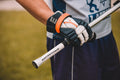
One-timing a bouncing pass means the stick takes a hit you didn't plan for. The Grip Pack is designed to give a secure hold and better puck and stick control, so your top hand stays put when the pass arrives on edge.
SEE THE GRIP PACK →
A planted shooting stance starts inside the boot. If your foot slides around in the skate when you shift your weight into a one-timer, the grip socks are designed to reduce foot slipping inside the skate.
SEE THE GRIP SOCKS →★ 4.7/5 from 50,000+ RocketGrip customers · 60-day money-back guarantee
Frequently asked questions
Where is Ovi's office?
Near the top of the left faceoff circle in the offensive zone. Ovechkin shoots right, so from that spot a cross-ice pass lands on his forehand for a one-timer.
Is Ovechkin really a slow skater?
According to the tracking data cited in the Saucer Pass video, his top skating speed has been near the bottom of the league in some seasons. His scoring comes from positioning, timing and his shot, not from foot speed.
How can I score more in beer league without skating faster?
Pick one scoring spot and go back to it every shift, arrive a few strides behind the rush, be set before the pass comes, decide your target early, and shoot imperfect passes in one touch instead of settling them.
Isn't standing in one spot just cherry-picking?
Not if you do your job in your own zone first. The method is about where you go in the offensive zone, not about skipping the backcheck.
I can't one-time the puck. Does this still work?
Yes. Use the slot as your office and work on quick wrist shots and rebounds there. The same ideas apply: be set early, decide early, release quickly.
Do grips or grip socks help me score?
Not on their own. The Hockey Grip Pack is designed to give a secure hold and better stick control, and the grip socks are designed to reduce foot slipping inside the skate. They support a steady stance and a steady stick. Positioning and reps do the scoring.
Watch the full Saucer Pass breakdown
Eight minutes on how the greatest goal scorer in history built his game on positioning instead of speed. Worth it for the goalie-reading section alone.
Video won't play? Watch on YouTube →
Pick a spot. Get there early. Shoot it.
You don't need new legs to score more. Choose your office, tell your linemates, trail the rush, be set before the pass and shoot whatever shows up.
Give your hands a grip that stays put, and your feet a sock that does the same.
- ★ 4.7/5 from 50,000+ RocketGrip customers
- 60-day money-back guarantee

Source: "Why The Best Goal Scorer Alive Barely Skates" by Saucer Pass (YouTube), October 2026. Statistics and research findings about Ovechkin, shot speed and goaltending are as reported in that video. RocketGrip is not affiliated with Saucer Pass, Alex Ovechkin, the Washington Capitals or the NHL. This article summarises and builds on a publicly available video; the 5-step method, office guide, base checklist, drills, mistakes list and gear notes are ours. No endorsement implied. AI-generated images are illustrations; real photos are credited where shown and used under their Creative Commons licences. RocketGrip grips and grip socks are performance accessories; they support technique and do not replace it. This article is general coaching information, not medical advice.